
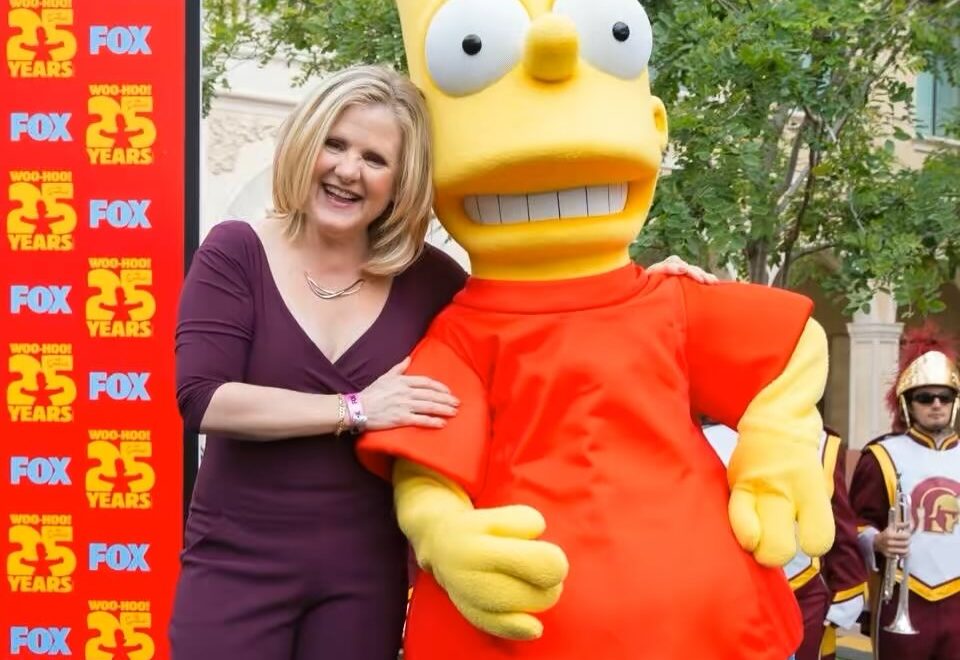
In a recent celebration marking the 800th episode of the iconic animated series ‘The Simpsons,’ voice actor Jason Cartwright, renowned for her portrayal of Bart Simpson, candidly expressed her views on the evolving role of artificial intelligence (AI) in the realm of voice acting. Cartwright, who has famously voiced Bart for over three decades, argued against the use of AI for capturing the emotional depth vital to her craft, asserting that human actors are irreplaceable.
Cartwright’s Stance on AI in Voice Acting
During the festivities, reported by People magazine, Cartwright took the opportunity to discuss the current advancements in AI technology. She acknowledged that while AI can mimic vocal patterns, it fundamentally lacks the emotional richness that a human performer brings to a role. “AI technology produces sounds that may resemble my voice, yet it fails to create an essential part of my vocal performance,” she stated, emphasizing that machines cannot emulate the complex emotional experience that fuels her work as an artist.
Cartwright elaborated on her sentiments, highlighting the human spiritual essence that enables performers to convey intricate emotional nuances. “I possess passion. Humans have a spiritual nature that allows us to express deep emotional states that can bring joy to others,” she explained. In her view, this depth is entirely absent from the realm of artificial intelligence, which lacks the capacity for genuine emotional expression.
Audience Reaction and Industry Debate
The voice actress’s remarks sparked a lively discussion across various social media platforms as fans and peers weighed in on her perspective. Many showed unequivocal support for Cartwright’s message, agreeing that while AI may replicate sounds, it cannot capture the human touch that defines a remarkable performance. One supporter poignantly noted, “AI can create identical sounds, but it lacks the fundamental essence of a human being.” Another sentiment shared was, “Passion, heart, and soul aren’t lines of code,” reflecting a common belief in the irreplaceability of human emotion in art.
Additionally, Cartwright’s heartfelt performance as Bart Simpson has continuously demonstrated the unique skills required for her long-term role. Comments from fans resonated with this, with one stating, “Her love for Bart Simpson really shows here,” encapsulating the connection between the actress and her beloved character. Her engagement with Bart is not merely a job; it embodies a deeper belief that the character represents a living entity that cannot simply be replaced or recreated.
Critical Perspectives
However, not all responses aligned with Cartwright’s views. Some critics expressed skepticism regarding her apprehensions about AI. One individual aimed to undermine her arguments, suggesting that advancements in technology should be embraced. “Why would we pay someone when we can literally just generate a voice for free?” questioned another critic, highlighting the ongoing debate within creative industries about the implications of AI.
This dialogue encapsulates the broader conversations being had across the entertainment sector concerning the integration of technology in creative fields. As AI capabilities expand, the stakes are high for artists like Cartwright, who have dedicated years to developing their craft and characters. With creative industries grappling with such transformation, Cartwright’s standpoint provides a stark reminder of the unique qualities that only human beings can impart to their performances.
A Legacy Beyond AI
Cartwright’s assertion that iconic phrases like “Eat my shorts,” which belongs to Bart Simpson, will remain an expression exclusive to humans underscores her belief in the enduring significance of authentic human expression in storytelling. This position not only echoes the sentiments of many within the voice acting community but also calls for ongoing dialogues about the evolving intersection of technology and the arts.
As ‘The Simpsons’ continues to thrive, propelled by its legacy of innovation and social commentary, Cartwright’s advocacy for the human touch in voice acting serves as a vital perspective in these rapidly changing times. As discussions around AI progress, the human elements inherent in storytelling and performance will remain paramount, ensuring that creators can continue to resonate with audiences on a deeply emotional level.