
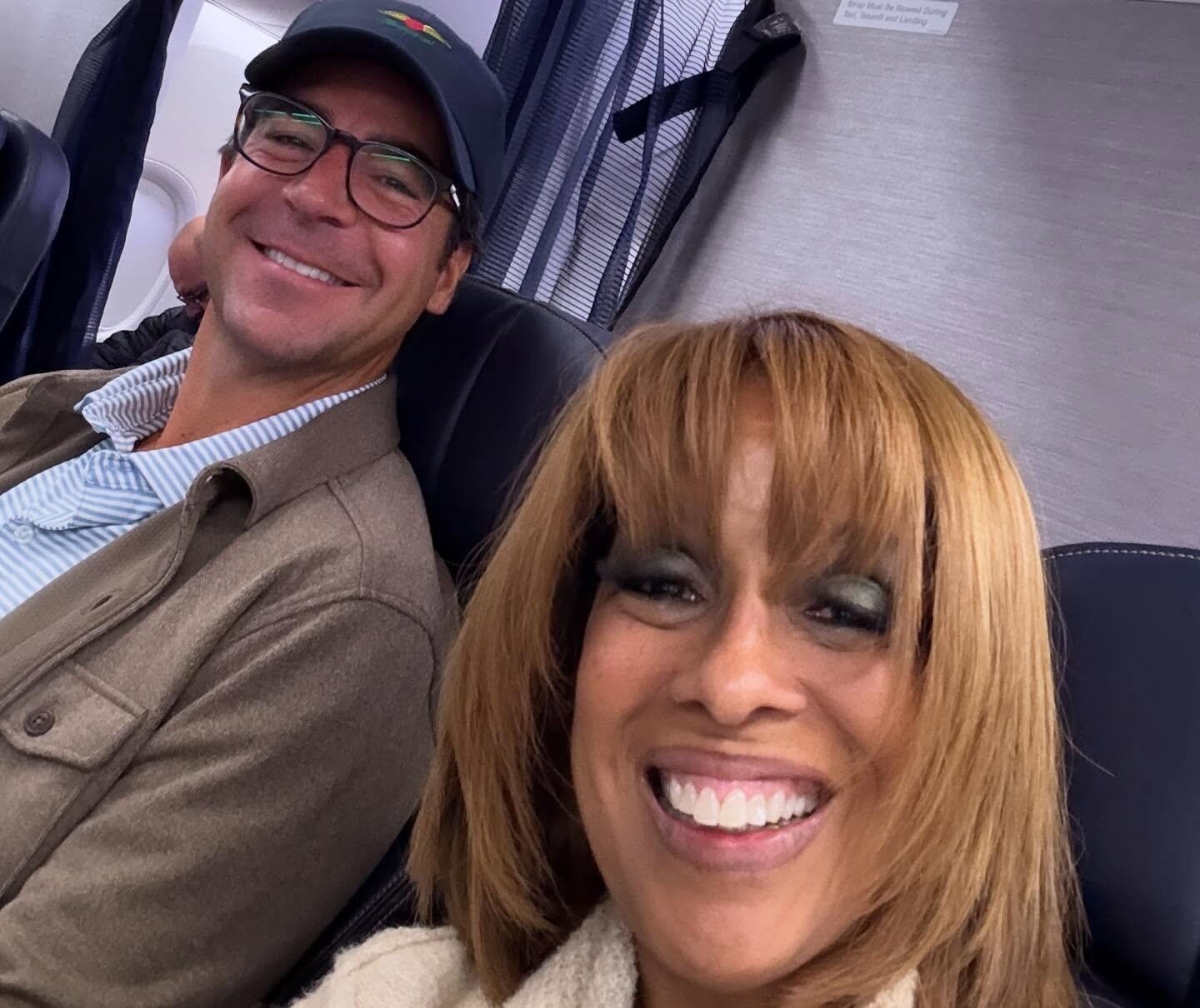
This week in the sphere of television news, Gayle King, the esteemed CBS News anchor, has found herself at the center of a social media tempest following an unexpected encounter with Fox News host Jesse Watters during a recent flight. King’s jovial post featuring the two sparked controversy among her followers, igniting a discussion about political alignment and personal connections in the media landscape.
The now-viral photograph depicted King grinning next to Watters, accompanying her caption, “Everybody had a blast! Hi Jesse… saving your number!” This light-hearted tone, however, failed to resonate with a significant portion of her audience, who reacted with vociferous disapproval. Many followers expressed disappointment, some even claiming that King misjudged the optics of her association with a figure known for his polarizing political commentary.
Critics inundated King’s post with remarks that conveyed their discontent regarding her newfound camaraderie with Watters. One user expressed a deep-seated frustration, stating, “I respect and love you, Gayle, your seat mate, however, is harming our country…” Such sentiments were echoed by others who felt that King’s post was inappropriate, urging her to reconsider her choice of companionship, especially given Watters’ history of controversial remarks on race and gender issues.
The commentary extended beyond mere disapproval, as some users framed the photograph as a betrayal of King’s public persona. One individual commented, “Curious the thought process with this post? It’s one thing to support opposing views. But when the individual loathes… how do you grin and bear it??” This critique metaphorically likened King’s friendly pose to socializing with extremist groups, highlighting the anger and disillusionment among her followers.
As criticism continued to simmer, some users chose sarcasm as their weapon of choice. One follower quipped, “It was so fun to sit next to my new friend who promotes misogyny and racism for a living. What is happening?” Such comments underscored the palpable incredulity felt by some of her audience. Another Twitter user artfully expressed their exasperation with a more graphic remark, illustrating the emotional turmoil sparked by King’s seemingly innocent post.
Amidst a whirlwind of backlash, a few voices arose to defend King, arguing that she exemplified civility by engaging with someone with whom she holds differing views. One supporter stated, “Reminder we all have to coexist people!!! ✌🏽Showing human decency when we can’t pick our own seat mates is why you’re the best Gayle.” This opinion championed the notion of respectful dialogue among conflicting perspectives, presenting King’s actions as a model of maturity and coexistence.
Despite the few voices of support, they were vastly outnumbered by the tide of criticism. “This is really not cute at all,” commented one user, while another cautioned, “U still got time to delete this sis,” suggesting that King’s social media misstep could tarnish her professional image. Phrases like, “Not the flex you think it is!” became widespread, indicating a broader sentiment that King had miscalculated the public’s reception of her display of friendship with Watters.
Reflecting on the broader implications of the situation, critics began referencing past controversies involving King, drawing connections to her association with influential figures who have faced scrutiny for their behaviors. One pointed out, “Well, her buddy Oprah gave us ‘doctors’ Oz & McGraw… so this makes perfect sense.” Such commentary suggested that King’s social choices might reflect a troubling trend in her personal associations, emphasizing the intertwining of media, personal relationships, and public opinion.
This incident involving Gayle King stands as a stark reminder of the polarized nature permeating contemporary media and politics. What some perceive as a simple act of human decency can also be interpreted as a moral misstep, showcasing the immense pressures public figures face in navigating the complexities of personal and political relationships. In an age where even seemingly casual gestures can spur significant backlash, the relationship between a journalist and their audience is put to the test.
The fallout from King’s airplane photo illustrates the delicate balance media personalities must maintain, as not only their professional endeavors but also their personal associations are subject to public scrutiny. As conversations around media representation and political alliances continue to evolve, King’s social media encounter serves as a microcosm of the broader culture wars in which many public figures find themselves entangled.